

Toyota once faced a software-related crisis that reportedly contributed to unintended acceleration incidents, massive recalls, and a $1.2 billion settlement. The problem was not just faulty code. It was poor software architecture.
Most businesses will never face losses on that scale, but the pattern is surprisingly common. Systems built without proper architectural planning often become expensive to maintain, difficult to scale, and harder to integrate as the business grows.
For startups, this can slow product growth and increase technical debt early. For legacy businesses pursuing digital transformation, it can quietly affect operational efficiency, reporting, customer experience, and long-term profitability.
In this blog, you will learn where poor architecture creates the biggest business costs, the warning signs most companies ignore, and how to build scalable business technology solutions without creating future operational problems.
Why Software Architecture Matters for Business Success
Software architecture is the structural foundation of your digital product. It defines how your systems are designed, how different components communicate, and how your platform performs as your business grows.
In simple terms, it is the blueprint behind your technology ecosystem.
Whether you are building a SaaS platform, modernising legacy systems, or investing in enterprise application architecture, the quality of your architecture directly affects scalability, operational efficiency, security, and long-term costs.
It also connects closely with solutions architecture and enterprise architecture by ensuring your technology decisions align with business goals, operational workflows, and future growth plans.
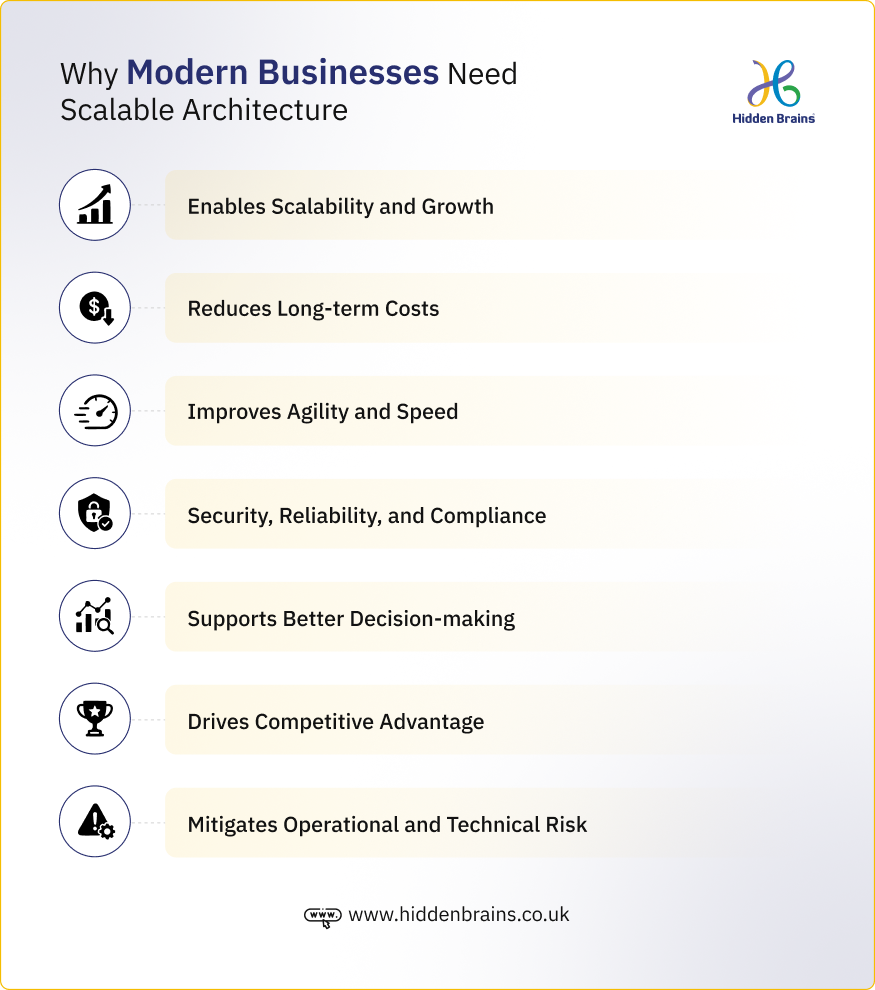
Here is why strong software architecture matters more than most businesses realise:
- Enables Scalability and Growth: Good architecture allows your systems to handle more users, data, and operational complexity without constantly rebuilding infrastructure. Poor architecture often creates bottlenecks that slow growth and increase operational costs.
- Reduces Long-term Costs and Technical Debt: Early architectural decisions shape maintenance costs for years to come. Weak foundations usually lead to expensive fixes, recurring redevelopment, and growing technical debt as systems evolve.
- Improves Agility and Speed to Market: Well-structured systems make it easier to release features faster, integrate new technologies, and adapt to changing market demands. This is especially important for businesses investing in AI-driven Business technology solutions.
- Enhances Security, Reliability, and Compliance: Strong architecture helps build security, resilience, and data protection into the system from the beginning. It reduces the risk of outages, compliance failures, and reputational damage.
- Supports Better Decision-making and Alignment: Effective business architecture improves alignment between leadership and technical teams. It helps translate business objectives into practical technology strategies.
- Drives Innovation and Competitive Advantage: Future-ready systems make it easier to adopt emerging technologies such as AI, cloud infrastructure, automation, and advanced analytics without major redevelopment efforts.
- Mitigates Operational and Technical Risk: Well-designed platforms are easier to maintain, more stable under pressure, and less dependent on constant firefighting from development teams. It improves productivity and reduces long-term operational strain.

The Real Cost of Poor Software Architecture
Poor software architecture rarely becomes obvious in the early stages of growth. In fact, your systems may appear to work perfectly well at first. The real problems usually surface later.
You start noticing slower releases, rising maintenance costs, unstable integrations, reporting gaps, performance issues, and growing pressure on your development teams. Over time, what began as a technical shortcut turns into a business problem.
If you are scaling a startup, this can slow product delivery and affect investor confidence. If you are modernising a legacy business, poor architecture can quietly increase operational costs and delay transformation goals.
Here is where the real cost starts affecting your business.
1. Rising Development Costs
If your team spends more time fixing systems than improving them, your architecture is already becoming expensive.
Poor software architecture creates complexity that slows every future release. What initially looked like a faster and cheaper development approach often becomes a long-term financial burden.
- Frequent rework due to unstable codebases
- Delays caused by an unclear system structure
- Growing dependency on senior developers for fixes
- Slower release cycles and feature delivery
- Increasing maintenance and redevelopment costs
Technical debt already consumes up to 40% of IT budgets in many organisations. Gartner also predicts that 80% of technical debt will become architectural by 2026.
2. Slow Product Performance
Your customers may never see your architecture, but they will definitely experience its impact.
As your platform grows, poor architectural decisions often create slower workflows, unstable performance, and inconsistent user experiences.
- Poor response times across applications
- Inefficient workflows are affecting daily operations
- Downtime during traffic spikes or high usage
- Reduced customer satisfaction and retention
- Increased operational disruption for internal teams
If your systems slow down every time usage increases, your architecture is limiting growth rather than supporting it.
3. Limited Scalability
Scaling should not require rebuilding your systems every few months.Without proper enterprise architecture planning, growth often creates more technical friction instead of operational efficiency.
- Difficulty adding new products or features
- Infrastructure bottlenecks during expansion
- Increased complexity as operations grow
- Delays when entering new markets or services
- Rising operational costs as demand increases
Strong enterprise architecture gives you the flexibility to grow without constantly restructuring your technology stack.
4. Security and Compliance Risks
Security problems are rarely isolated incidents. In most cases, they begin with weak architectural decisions. Fragmented systems, inconsistent data handling, and poorly connected platforms increase both technical and financial risk.
- Weak access controls across systems
- Poor visibility into data movement
- Increased exposure to security vulnerabilities
- Difficulty maintaining compliance standards
- Greater reputational and financial risk
If security is added later instead of built into your software architecture, the cost of fixing problems becomes significantly higher.
5. Integration Challenges
Most modern businesses rely on multiple platforms working together. Poor enterprise application architecture makes those integrations more difficult than they need to be.
You often end up with disconnected systems, manual processes, and operational inefficiencies that slow decision-making.
- Difficulty integrating third-party tools and APIs
- Operational silos across departments
- Manual work caused by poor automation capability
- Delayed reporting and workflow visibility
- Reduced productivity across teams
A strong solution architecture helps your systems communicate efficiently as your business grows.
6. Poor Decision-Making Due to Weak Data Structure
If your reporting feels inconsistent or delayed, the problem may not be your analytics tools. It may be your architecture. Disconnected systems create unreliable data flows, making it harder for leadership teams to make confident business decisions.
- Inconsistent reporting across departments
- Duplicate or unreliable business data
- Delayed operational insights
- Reduced visibility into performance metrics
- Slower strategic decision-making
A strong business intelligence architecture helps you create cleaner data structures and more reliable reporting across the organisation.
7. Technical Debt That Keeps Growing
Technical debt does not stay small for long. The more temporary fixes your systems depend on, the harder it becomes to innovate, scale, or modernise your platform.
- Temporary fixes are becoming permanent dependencies
- Outdated systems are slowing product innovation
- Increasing development complexity over time
- Reduced developer productivity
- Higher long-term maintenance costs
For projects with around one million lines of code, technical debt can cost roughly $306,000 every year in maintenance and lost productivity. Over five years, that can exceed $1.5 million.
This is why experienced teams prioritise scalable software architecture from the outset rather than treating it as an afterthought.
How to Avoid Poor Software Architecture
Avoiding poor software architecture is far less expensive than fixing it later. The right architectural decisions early on can save you years of redevelopment costs, operational inefficiencies, and scalability problems.
Whether you are building a startup product or modernising legacy systems, the goal should be simple: create technology that supports growth instead of slowing it down.
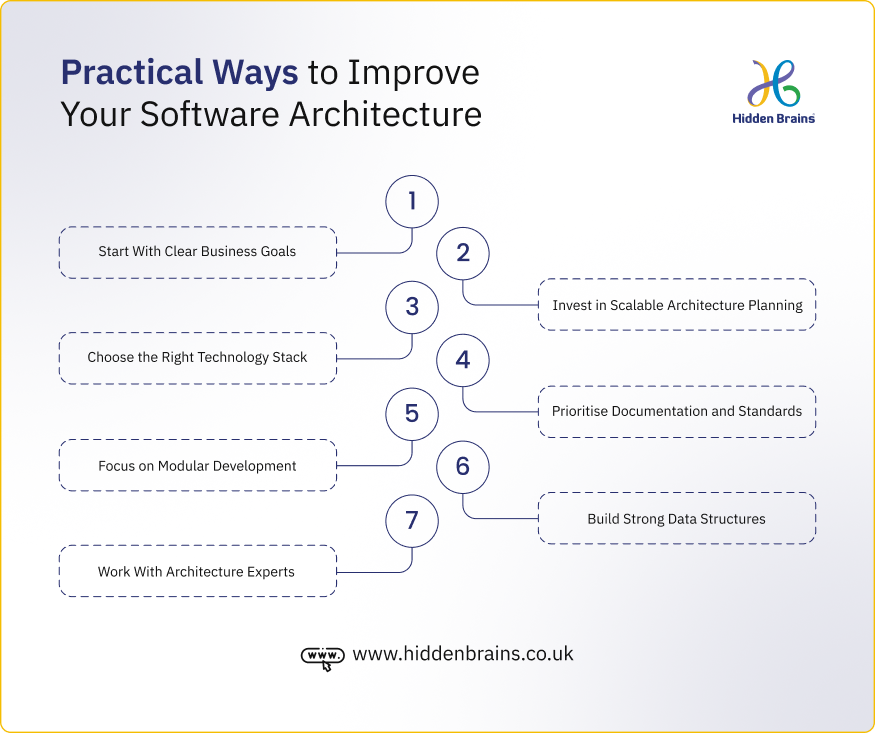
1. Start With Clear Business Goals
Your architecture should support your business strategy, not work against it.
Before development begins, you need clarity around operational workflows, customer expectations, future scaling plans, and internal processes. Strong business architecture helps ensure your technology decisions align with long-term business goals rather than short-term delivery pressure.
2. Invest in Scalable Architecture Planning
If scalability is treated as a future problem, it usually becomes an expensive one.
Investing in scalable software architecture from the beginning makes it easier to handle growth, add new services, and support increasing user demand without constantly rebuilding systems. Strong enterprise architecture and solutions architecture also reduce long-term operational friction as your platform evolves.
3. Choose the Right Technology Stack
The most popular technology is not always the right choice for your business.
Your technology stack should support performance, flexibility, security, and long-term maintainability. Choosing technologies based purely on trends often creates unnecessary complexity later, especially as your systems scale.
4. Prioritise Documentation and System Standards
Poor documentation creates confusion, slows onboarding, and leads to inconsistent development practices.
Clear technical documentation and system standards help your teams collaborate more effectively, reduce dependency on individual developers, and maintain consistency across projects as your organisation grows.
5. Focus on Modular and Flexible Development
Rigid systems become difficult to maintain very quickly.
Modular development allows your teams to update features, integrate new tools, and scale services without affecting the entire platform. This flexibility becomes especially important as your business operations and customer expectations evolve.
Build Strong Data and Reporting Structures
Good reporting depends on good architecture.
Without proper data structures, your teams often end up working with inconsistent reports and fragmented operational insights. A strong business intelligence architecture helps create cleaner data flow, better analytics visibility, and more reliable decision-making across the organisation.
Work With Experienced Architecture Experts
Architecture decisions made early can affect your business for years.
An experienced IT solution architect can help you identify scalability risks, integration challenges, and long-term operational gaps before they become expensive problems. Working with a reliable Software Development Company also gives you access to structured planning, scalable engineering practices, and future-ready Business technology solutions that support sustainable growth.

How Hidden Brains Can Fix Your Architecture
If your systems are already showing signs of strain, you don’t just need more development work; you need the right software architecture foundation.
At Hidden Brains UK, I focus on identifying architectural gaps early and rebuilding systems into scalable, secure, and future-ready Business technology solutions.
I work across enterprise architecture, solutions architecture, and modern engineering practices to reduce technical debt, improve performance, and align technology with your business goals. Whether you are scaling a startup or modernising legacy platforms, the aim is simple: build systems that grow with your business, not against it.
Conclusion
Poor software architecture is not just a technical challenge — it is a direct business risk. It quietly impacts your costs, slows down your teams, and limits how fast you can respond to market changes.
If you take a proactive approach to software architecture early, you reduce long-term development costs, avoid unnecessary technical debt, and improve operational efficiency across your organisation. It is always cheaper to design correctly than to fix later.
The real value comes when your software architecture is aligned with your business architecture. That alignment ensures your technology decisions support growth, rather than restrict it.
In the end, strong architecture is what enables sustainable digital growth and future-ready Business technology solutions.
FAQs
1. What is software architecture in simple terms?
Software architecture is the overall structure of your system. It defines how different components interact and how your application behaves as it scales.
2. Why is poor software architecture so expensive?
Because it leads to constant rework, technical debt, downtime, and inefficient systems that require ongoing fixes instead of building new features.
3. What is the difference between software architecture and enterprise architecture?
Software architecture focuses on individual systems, while enterprise architecture considers the entire organisation’s technology landscape and its alignment with business goals.
4. How does software architecture affect scalability?
If your architecture is not designed for growth, your systems will struggle with increased users, data, and complexity, leading to performance issues and higher costs.
5. What is technical debt in software systems?
Technical debt refers to the long-term cost of quick fixes or poor design decisions that eventually require expensive refactoring or redevelopment.
6. When should a business rethink its software architecture?
You should reconsider your architecture when you face frequent system failures, rising maintenance costs, slow releases, or difficulty scaling your platform.
Table of Contents